


SAP upgrades and mountain summits have one thing in common. The hardest moments come right before the breakthrough.
I’ve spent meaningful time with SAP across two very different contexts, and the lessons from both still shape how I think about large-scale modernization. One experience was a revelation. The other was a grind. Together they gave me a clear picture of what separates the upgrades that work from the ones that don’t.
Building for eComm
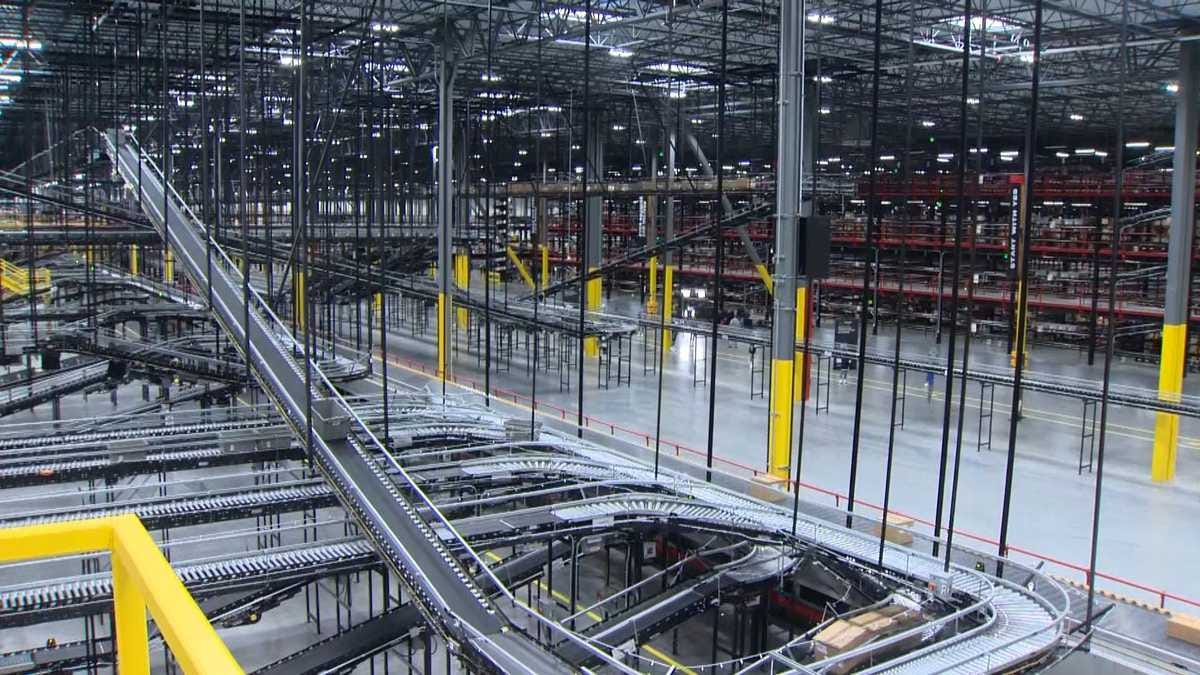
My introduction to SAP came during the build-out of an eCommerce distribution center at Under Armour. It shattered everything I thought I knew about ERP systems.
This wasn’t the finance-and-procurement backend most people picture when they hear SAP. What I witnessed was supply chain orchestration at a level I hadn’t seen before. SAP was synchronizing robotic pickers, conveyor belts, human operators, and real-time inventory into a high-velocity operation that ran with genuine precision. The system wasn’t supporting the business. It was running it.
That experience stuck with me. SAP, properly architected and executed, is not an administrative tool. It’s a competitive one.
A More Traditional Challenge: Surviving the ERP Beast

My second encounter was more typical, and considerably more painful.
At Laureate Education, we undertook a large-scale SAP implementation touching finance, HR, procurement, and student lifecycle management. Massive scope. Endless process workshops. Stakeholder fatigue setting in before the halfway mark. A looming go-live that kept everyone up at night.
The initiative survived because of two things: the discipline Accenture brought to the engagement and the structure of the Scaled Agile Framework. SAFe gave us a reliable cadence to manage risk, incremental delivery so sponsors could see progress before the finish line, and enough ongoing engagement that alignment didn’t quietly fall apart between milestones.
It wasn’t clean, but it worked. And it left me convinced that no matter how complex the system, agility is not optional.
The New Frontier: The S/4HANA Upgrade
SAP’s sunsetting of ECC forces a decision every customer is now navigating: modernize or fall behind. The urgency is real. So is the difficulty.
ASUG’s 2024 research found that 49% of organizations already live on S/4HANA reported costs exceeding their original budgets, up 17% from the prior year. Consulting fees were the primary driver, rising 20% year over year. The average migration runs about 18 months. Nearly half of respondents said the multi-step nature of the process, combined with existing business complexity, made it more resource-intensive than they anticipated.
A Horváth study from early 2025 found that more than 60% of companies experience deviations in budget, schedule, or result quality during migration. Precisely’s November 2025 research with ASUG showed that while 59% of companies are now fully or partially live on S/4HANA, the top barriers remain business process change at 49%, customizations at 44%, and organizational resistance at 37%.
These numbers deserve to be taken seriously. This is not a technical refresh. It touches business processes, data models, custom code, integration layers, and security frameworks. The question most organizations are asking is how to move without destabilizing what’s already running.
The traditional ERP playbook does not answer that question well. The world moves faster now. Customer expectations shift quarterly. Employees will not tolerate clunky systems for years while a transformation catches up. “Get it right in five years” is not a strategy anymore.
SAFe as the Operating Model
The Scaled Agile Framework offers something most transformation approaches don’t: a structure that fits how organizations actually operate under pressure.
For global, multi-brand, highly integrated SAP landscapes, Large Solution SAFe manages the orchestration of multiple Agile Release Trains, aligns cross-functional teams, and continuously surfaces systemic risk before it becomes a crisis. For regional instances or more focused process domains, Essential SAFe and Solution SAFe offer a lighter configuration without sacrificing the rigor.
Across all of these, the core value is the same: incremental delivery tied to business outcomes, governance flexible enough to adapt, risk management built into the cadence rather than bolted on at the end, and a model that keeps stakeholders engaged rather than waiting for a big reveal.
What most people miss is that SAFe’s relevance to SAP transformations isn’t just a consulting opinion. It’s recognized within the SAP Activate methodology itself. In October 2024, SAP released the SAP Activate and Scaled Agile Framework Playbook as an accelerator for the Prepare phase, a practical resource for teams running S/4HANA Cloud implementations inside SAFe environments. SAP’s own documentation describes the combination this way: Activate provides the what, the milestones, phases, and checkpoints. SAFe delivers the how, the operating model that turns a plan into an actual outcome.
The GenAI Value-Add
GenAI is not a solution to the complexity of an S/4HANA migration. It is a tool that, applied correctly, shortens specific parts of it meaningfully.
SAP’s Chief Revenue Officer for Cloud ERP, David Robinson, told The Register that GenAI can reduce the time and cost associated with documenting current processes and assessing the gap between as-is and to-be by 50 to 80%. That’s a significant number coming from SAP’s own leadership.
In practice, that shows up in a few specific places. GenAI tools can scan existing ABAP code, identify compatibility issues with S/4HANA, and generate remediation recommendations. SAPinsider research confirms that AI is moving beyond pilot projects into practical applications with measurable impact. GenAI can also translate test cases written in natural language into executable test scripts, analyze requirements documents to generate test coverage, and help predict integration risks by examining patterns in historical defect data.
None of this replaces the upgrade team. It amplifies what the team can do in a given window of time. The organizations getting real value from GenAI in this context are treating it as a force multiplier with governance and quality gates behind it, not as a shortcut around the hard work.
The Change Problem
Most consultants won’t lead with this, but the Prosci Institute puts the failure rate for projects with inadequate change management at 75 to 80%. The root causes are consistent: poor planning, weak communication, and stakeholder engagement that starts too late and fades too fast.
Here’s the context that makes those numbers worse. The average employee went through ten planned enterprise changes in 2022, compared to two in 2016. Employee support for change dropped from 74% in 2016 to 43% in 2022. Your people are not resisting S/4HANA because they fear the technology. They’re resisting because they’ve watched too many transformations promise clarity and deliver chaos.
This is why SAFe matters beyond the delivery mechanics. The cadence creates trust. Showing progress early and often keeps stakeholders engaged instead of skeptical. Giving teams a visible structure to work inside lets them absorb change without burning out in the process.
I’ve seen what happens when organizations stay stuck inside legacy systems because the upgrade felt too risky. I’ve also seen what happens when they move deliberately, with the right structure behind them. The difference isn’t usually the technology. It’s the leadership and the operating model surrounding the work.
A Smarter Approach
An S/4HANA migration done well is an opportunity to rethink how the organization operates, serves customers, and competes. Done poorly, it’s an expensive way to end up roughly where you started.
The organizations getting this right share a few things. They have a delivery structure, usually SAFe, that lets them move incrementally without losing coherence. They’re using GenAI in targeted ways to compress the most labor-intensive parts of the process. They have executive sponsorship that is genuinely engaged, not ceremonially attached. And they have cross-functional teams that are aligned around business outcomes rather than technical milestones.
The old model, large consulting armies, big budgets, and a high-stakes cutover weekend where everything is supposed to magically work, has a poor track record. The data above confirms it. The organizations that treat this as a continuous modernization effort rather than a one-time project are the ones that come out with something they can actually build on.
Don’t fear the complexity. Understand it. Don’t wait until you’re ready. Start iterating and let the work sharpen your picture of what’s actually required.
The hardest part of the climb is usually the part just before the top. That’s also where most people turn back. The ones who don’t are the ones who finish.